
 English
 Tiếng Việt

TÌM ĐẦU RA ỔN ĐỊNH CHO TRÁI XOÀI, NÂNG CAO GIÁ TRỊ MÙA VỤ
29 May 2026
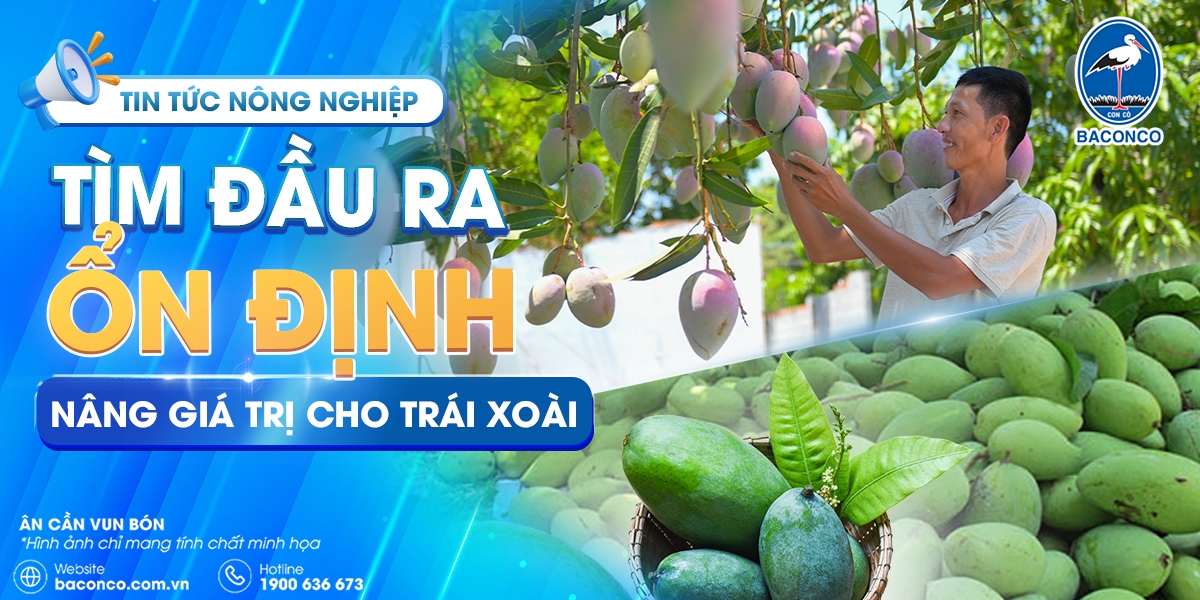
Finding stable market outlets for mangoes is becoming a key solution in An Giang to support growers, overcome market pressure, and enhance the value of agricultural products.
Finding stable market outlets for mangoes in An Giang
As the main mango harvest season begins, many growers in Cu Lao Gieng Commune, An Giang Province, are facing a sharp decline in mango prices despite increased output. In the context of rising fertilizer costs, crop protection expenses, and labor costs, finding stable market outlets for mangoes has become a major concern for local farmers.
In response to this situation, local authorities are promoting consumption linkages, market expansion, and investment in mango processing in order to find stable market outlets for mangoes in the coming period.
Sharp decline in mango prices causes difficulties for growers
Many mango farmers in Cu Lao Gieng Commune shared that this year’s harvest has been productive, with average yields reaching 3 – 4 tons per 1,000 m². However, purchasing prices at orchards have dropped significantly compared to the same period last year.
Currently, seedless mangoes are being purchased at around VND 2,000 – 4,000/kg, while green skin giant mangoes are priced at VND 10,000 – 15,000/kg, down by VND 5,000 – 10,000/kg compared to last year. At these price levels, after deducting fertilizer costs, crop protection expenses, and labor costs, farmers are earning little to no profit.
The sharp decline in mango prices is placing significant pressure on growers during this harvest season.
Increasing supply puts pressure on the mango market
According to the Farmers’ Association of Cu Lao Gieng Commune, the locality currently has approximately 4,198 hectares of mango cultivation, with green skin giant mangoes accounting for 98% of the total area. The simultaneous harvest has caused supply to increase sharply, leading to oversupply and creating pressure on the consumption market.
In addition, most mangoes are still mainly distributed to Ho Chi Minh City and southern provinces, making the market heavily dependent on fresh fruit consumption channels.
The current situation highlights the urgent need to find stable market outlets for mangoes to help stabilize prices and reduce pressure on growers.
Strengthening consumption linkages to find stable market outlets for mangoes
To find stable market outlets for mangoes, local authorities are encouraging farmers to participate in cooperative groups and cooperatives in order to strengthen consumption linkages. Models such as Cu Lao Gieng GAP Mango Cooperative, Con En Cooperative, and Cho Moi Cooperative are being promoted to support growers in connecting with markets and expanding product distribution.
At the same time, local authorities are also calling for businesses to invest in mango processing factories, including dried mango production, mango juice processing, and other processed products to diversify market channels and reduce pressure on fresh mango consumption.
Expanding market access and developing processing activities are considered important solutions to find stable market outlets for mangoes in the current context.
Solutions to enhance mango value in the coming period
Besides expanding consumption markets, local authorities are also encouraging farmers to apply advanced technologies in cultivation in order to enhance the value of mangoes. The agricultural sector is also being urged to strengthen cooperation between scientists and farmers to develop sustainable and long-term solutions for mango consumption.
Combining product quality improvement, consumption linkages, and processing development is expected to contribute to finding stable market outlets for mangoes while enhancing the value of agricultural products in the future.
Conclusion
As mango prices continue to decline due to increasing supply, finding stable market outlets for mangoes has become an essential solution to support growers and reduce economic pressure. Strengthening consumption linkages, expanding processing investment, and improving product quality are expected to help the mango industry develop more sustainably and efficiently in the coming years.
Source:
https://www.tintucnongnghiep.com/2026/04/tim-au-ra-on-inh-nang-gia-tri-cho-trai.html
Views
247