
 English
 Tiếng Việt

FERTILIZATION TECHNIQUES FOR RUBBER TREES DURING THE RAINY SEASON TO SUPPORT TREE HEALTH AND MAINTAIN LATEX YIELD
22 Jul 2026
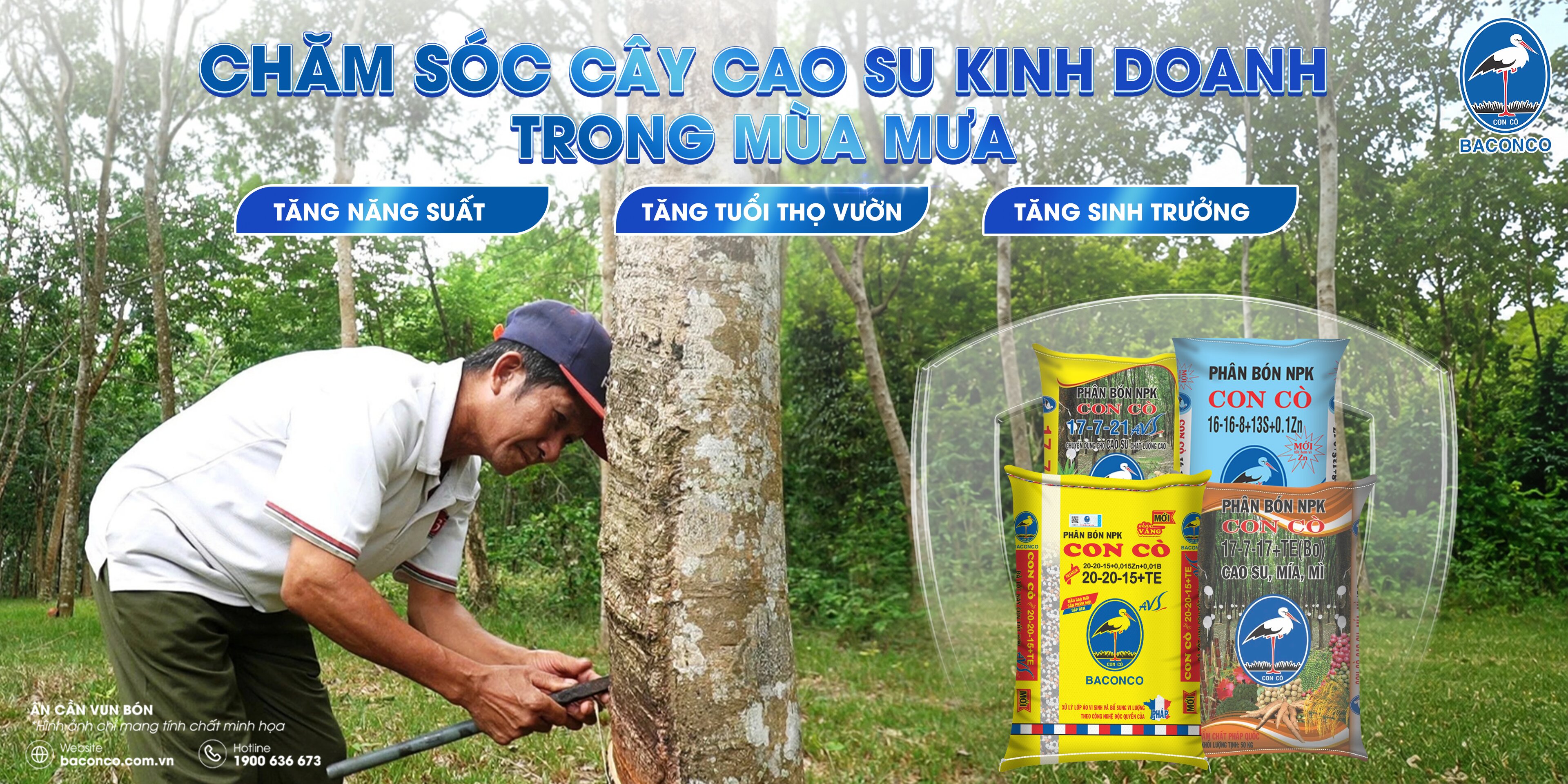
Proper fertilization techniques for rubber trees during the rainy season help trees recover after the dry season, develop stronger roots, maintain healthy foliage, and support effective latex harvesting during the commercial production stage.
Fertilization techniques for rubber trees during the rainy season should focus on each growth stage
The rainy season provides favorable soil moisture conditions, allowing rubber trees to absorb nutrients more effectively. However, applying proper fertilization techniques for rubber trees during the rainy season at the right timing is important to reduce nutrient loss and improve fertilizer efficiency.
For commercial rubber trees, which are currently in the latex harvesting stage, maintaining a stable nutrient supply is essential to support root systems, leaf development, and nutrient accumulation.
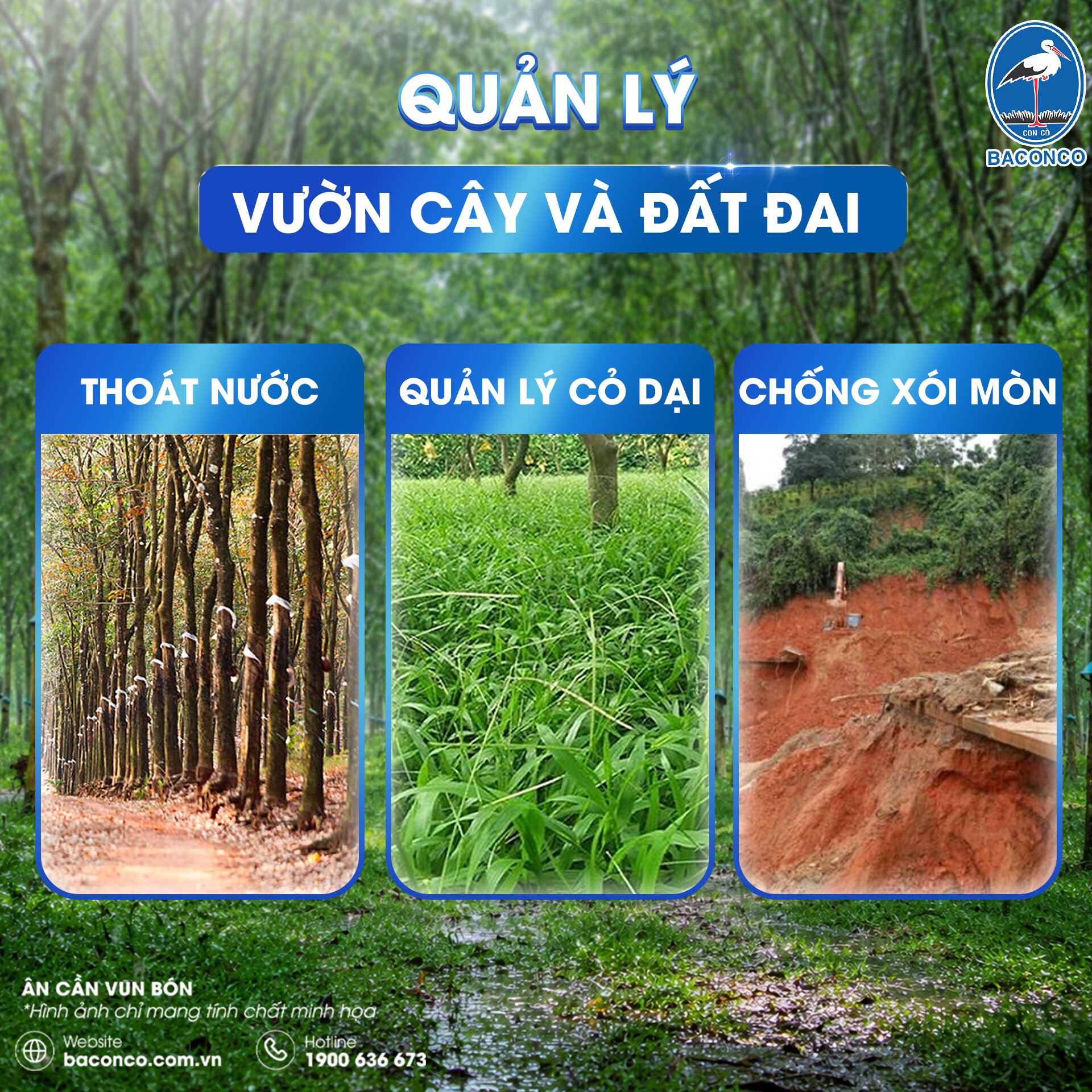
During the rainy season, farmers should avoid applying fertilizer during heavy rainfall or when the soil is overly saturated to limit nutrient leaching. The suitable timing is when rainfall becomes stable, soil moisture is sufficient, and trees enter an active growth period.
Early rainy-season fertilization helps rubber trees recover after the dry season
At the beginning of the rainy season, rubber trees often require additional nutrients to recover after dry conditions and develop stronger roots and foliage.
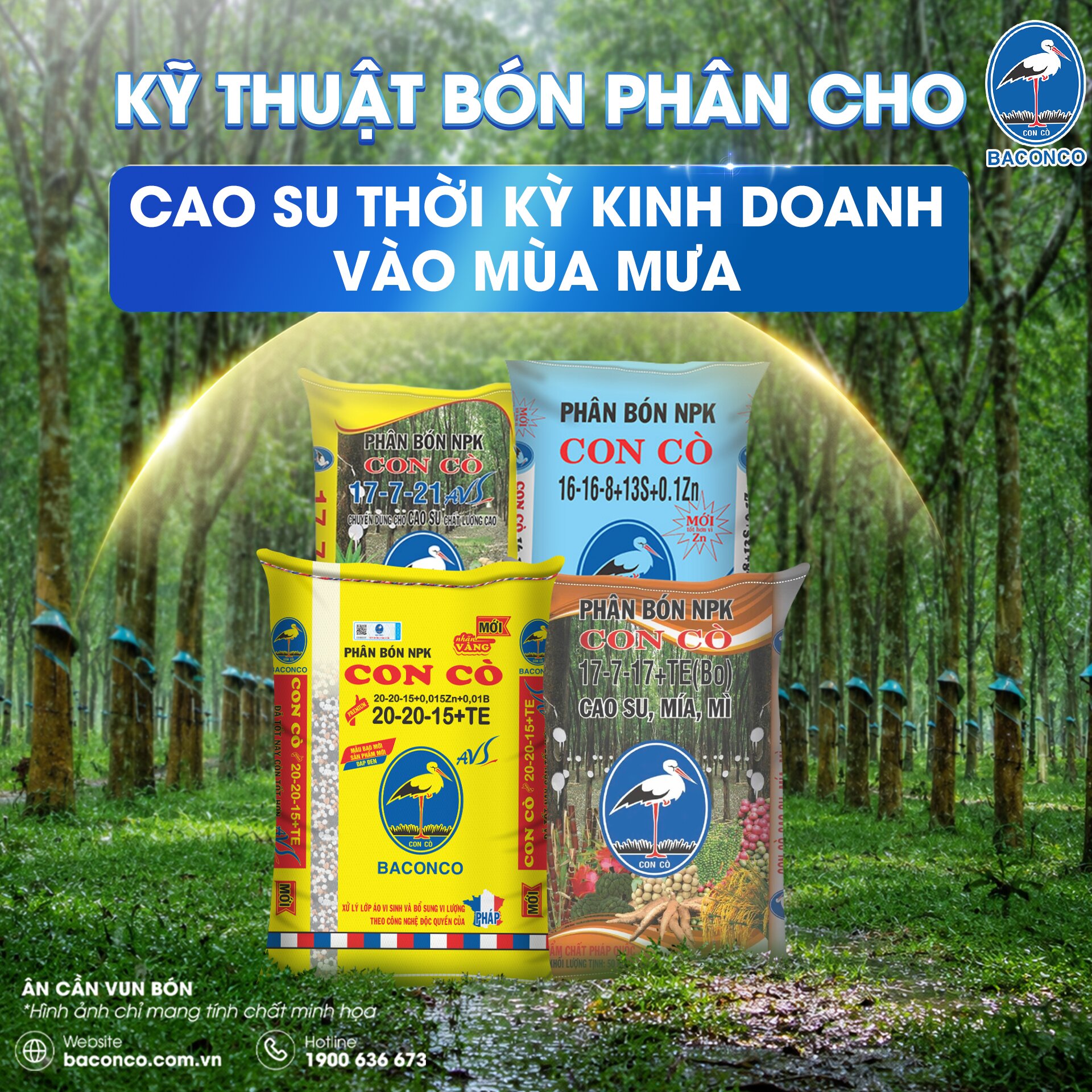
As part of fertilization techniques for rubber trees during the rainy season, farmers can consider suitable NPK CON CÒ fertilizer products, including:
- NPK CON CÒ 20-20-15+TE AVS NHÃN VÀNG
- NPK CON CÒ 16-16-8+13S+0.1Zn
Recommended dosage:
200 - 300 kg/ha/application (depending on tree age and soil conditions).
Balanced nutrient supplementation during this stage helps:
- Support root recovery.
- Promote leaf development.
- Improve photosynthesis.
- Create a strong growth foundation for the latex harvesting stage.
When trees receive suitable nutrition from the beginning of the rainy season, commercial rubber trees can maintain more stable growth throughout the harvesting cycle.
Potassium supplementation in the middle and late rainy season supports latex production
During the middle and late rainy season, rubber trees continue to require nutrient supplementation, especially Potassium (K), to support nutrient accumulation and latex formation.
Within fertilization techniques for rubber trees during the rainy season, farmers can consider the following NPK CON CÒ fertilizer products:
- NPK CON CÒ 17-7-21 AVS
- NPK CON CÒ 17-7-17+0.1B+0.15Zn
- NPK CON CÒ 20-20-15+TE AVS NHÃN VÀNG
Recommended dosage:
200 - 300 kg/ha/application (depending on tree age and soil conditions).
During this period, balanced supplementation of Potassium and other nutrients helps:
- Support nutrient accumulation in trees.
- Maintain tree health during the harvesting stage.
- Contribute to stable latex yield and quality.
This is an important part of rubber plantation care, especially for plantations entering stable latex production.
Proper fertilizer application methods improve efficiency during the rainy season
Besides choosing suitable products, fertilizer application methods also affect nutrient absorption efficiency.
According to fertilization techniques for rubber trees during the rainy season, farmers can consider the following application methods:
- Apply fertilizer around the tree canopy projection area.
- Or apply fertilizer in strips about 1 - 1.5 meters wide between two rows of trees.
- After fertilizing, lightly incorporate soil or cover with dry leaves and decomposed grass to reduce evaporation and nutrient leaching.
Proper fertilizer application helps rubber trees absorb nutrients more effectively while supporting rubber plantation care under changing rainy-season conditions.
Rubber tree disease prevention and tapping panel protection during the rainy season
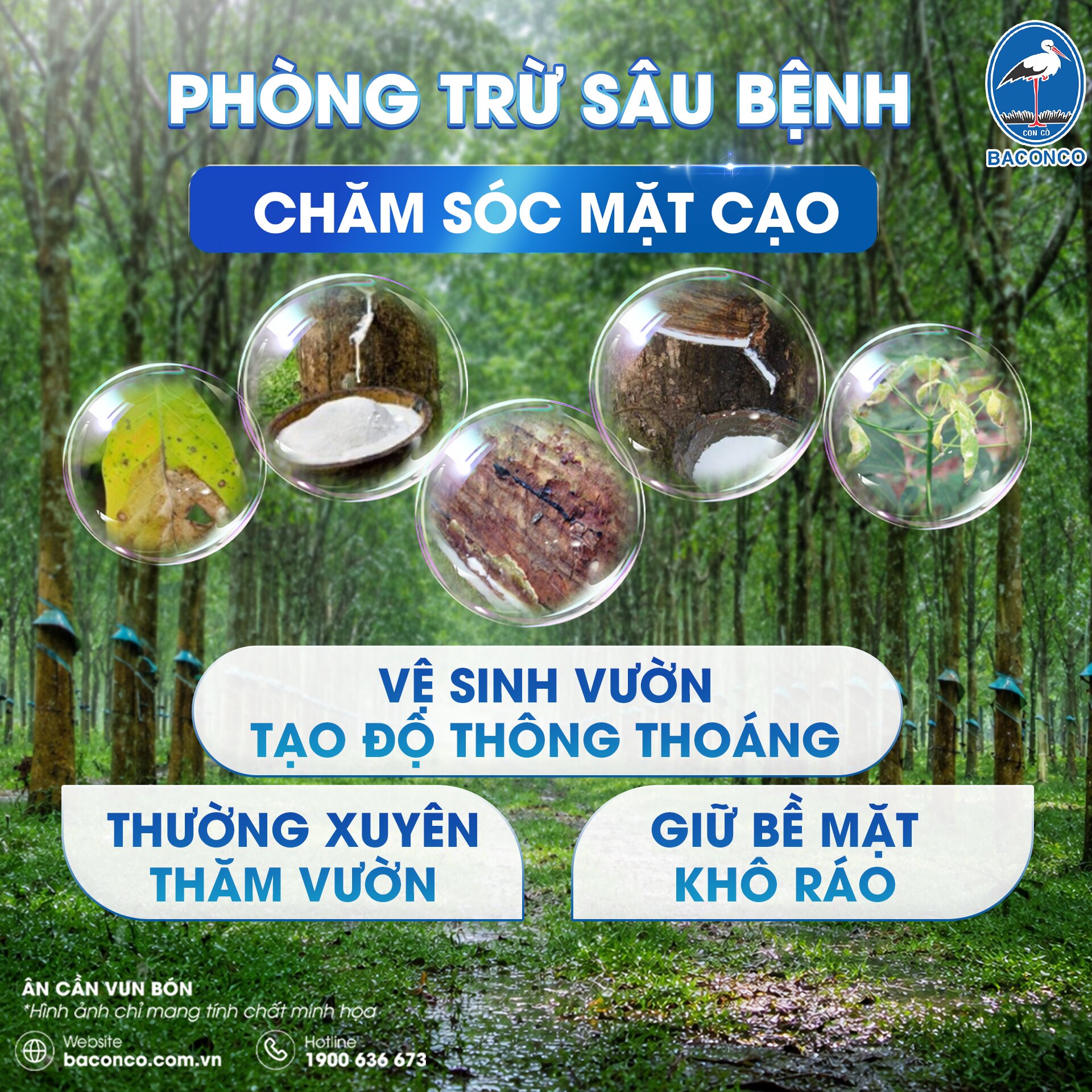
Besides nutrition management, rubber tree disease prevention is also an important factor that requires attention during the rainy season.
High humidity conditions may increase the risk of several diseases, including:
- Powdery mildew.
- Pink disease.
- Tapping panel streak disease.
- Rainy-season leaf fall.
- Tapping panel dryness.
To reduce disease risks, farmers should:
- Maintain plantation hygiene and remove diseased branches to improve ventilation.
- Apply balanced fertilization and avoid excessive Nitrogen (N), which may make trees weaker.
- Regularly inspect plantations to identify abnormal signs.
- Use plant protection products when necessary according to technical recommendations.
For commercial rubber trees, protecting the tapping panel plays an important role in maintaining effective latex harvesting.
Farmers should only tap latex when the tapping panel is completely dry after rainfall. At the same time, preventing rainwater from flowing directly onto the tapping panel helps reduce disease risks.
Commercial rubber tree care requires a combination of nutrition and plantation management
To help rubber trees maintain stable growth and latex production, farmers need to combine proper nutrition management, tree monitoring, and disease management.
Applying suitable fertilization techniques for rubber trees during the rainy season together with appropriate NPK CON CÒ fertilizer helps provide essential nutrients for trees at each growth stage.
In addition, regular rubber plantation care allows farmers to proactively identify potential issues, protect trees, and maintain production efficiency.
Conclusion
Fertilization techniques for rubber trees during the rainy season play an important role in helping trees recover after the dry season, develop stronger roots, maintain healthy foliage, and support latex harvesting performance.
For commercial rubber trees, selecting suitable NPK CON CÒ fertilizer, applying at the right timing, and combining effective plantation management can contribute to maintaining tree health, stabilizing yield, and improving cultivation efficiency.
Besides nutrition management, farmers should also focus on rubber tree disease prevention and tapping panel protection during the rainy season to support sustainable rubber tree development throughout the harvesting cycle.
Views
4