
 English
 Tiếng Việt

2026: VIETNAMESE AGRICULTURAL PRODUCTS ENTER THE GAME OF QUALITY AND SUSTAINABILITY
11 Feb 2026
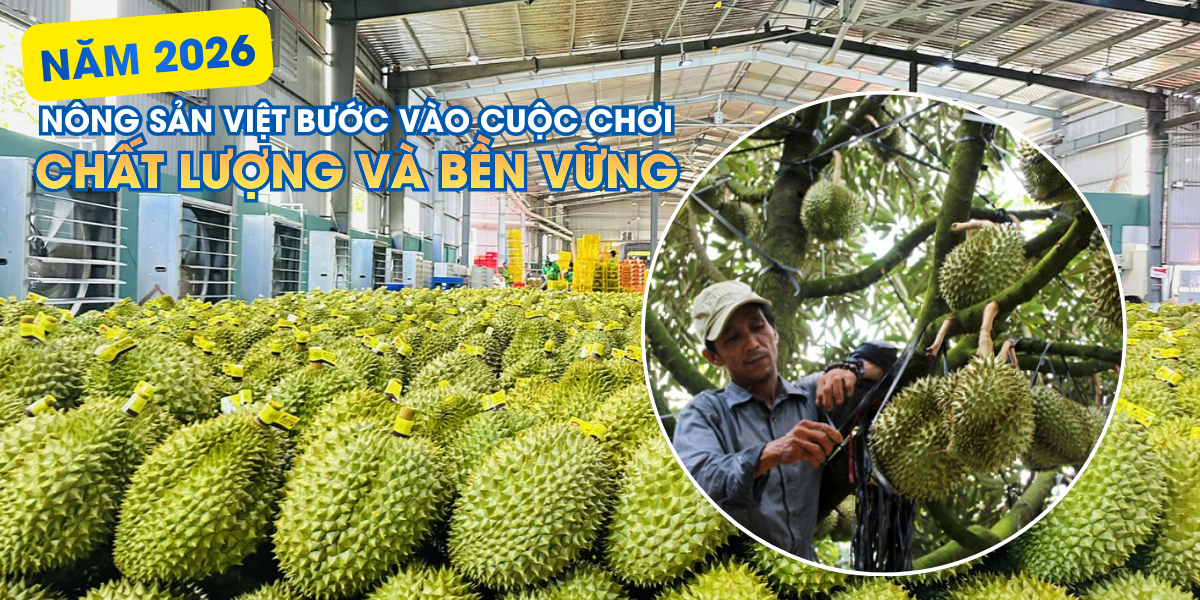
In 2026, Vietnamese agricultural products are undergoing a strong transformation toward high-quality production and sustainable development to meet global market requirements and enhance export value.
Agricultural strategy renewal in 2026
The year 2026 marks a major turning point in the overall landscape of Vietnamese agriculture in 2026, as the sector enters a new game—prioritizing product quality and sustainable development instead of merely pursuing output volume. This shift is inevitable as international markets impose increasingly strict requirements on traceability, quality standards, and environmental responsibility.
According to assessments by the Ministry of Agriculture and Environment, Vietnam’s agricultural sector is undergoing a comprehensive strategic repositioning, with a strong focus on product quality, transparent supply chains, and the application of modern technologies in production.
Shifting from quantity to quality
As global markets continue to tighten technical and environmental standards, Vietnamese agricultural products must transition from a quantity-driven production model to one that emphasizes higher quality standards and transparent traceability. This shift is essential to maintain and expand export markets in the long term.
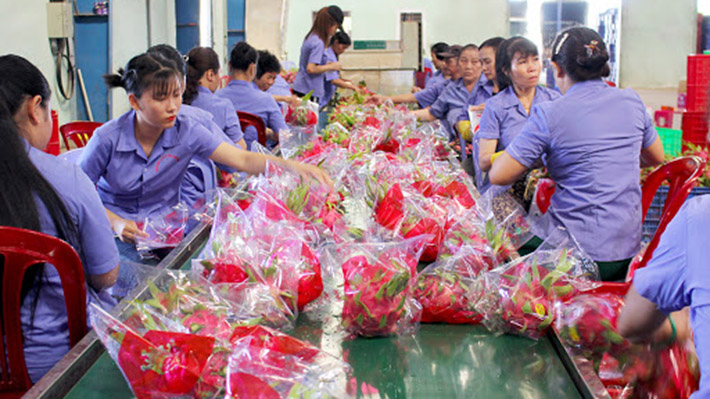
Product quality is one of the key factors that increases the market share of Vietnamese agricultural products on the global map. Source: Internet
In particular, compliance with international regulations such as the EU Deforestation Regulation (EUDR) and carbon footprint requirements has become the “new rules of the game” that Vietnamese businesses and farmers must adapt to starting in 2026.
Governance innovation and traceability
To meet evolving market demands, Vietnam is building and updating databases for cultivation areas while implementing technical solutions that enable traceability down to individual land plots. This effort establishes a transparent data foundation, allowing enterprises to be more proactive in production planning and export activities.
At the same time, the Ministry of Agriculture and Environment is strengthening dialogue with international authorities to address technical challenges related to traceability criteria and production mapping.
Market diversification and international cooperation
A key component of the 2026 strategy is the diversification of export markets to reduce reliance on a limited number of major destinations. Expanding trade partnerships into new regions will help mitigate risks and enhance adaptability amid ongoing global challenges such as trade protectionism and supply chain disruptions.
In parallel, the development of sustainable standards and certifications is considered a decisive factor in enabling Vietnamese agricultural products to penetrate demanding markets such as Europe, North America, and other developed economies.
Focusing on sustainable development
Beyond the goal of increasing exports, 2026 also marks a year in which Vietnam places greater emphasis on sustainable agricultural development, alongside commitments to environmental protection and emissions reduction. Programs promoting green agriculture, clean production, and agricultural digitalization are being strongly advanced to establish a solid foundation for the sector’s long-term growth.
Conclusion
Overall, the landscape of Vietnamese agriculture in 2026 reflects a strategic shift from quantity-driven growth to a focus on quality and sustainability. The adoption of technology, enhanced traceability, export market diversification, and compliance with international standards not only help Vietnamese agricultural products maintain their competitive position in the global market, but also lay the groundwork for Vietnam’s agriculture to overcome challenges and achieve breakthroughs in the next phase of development.
Views
544